
 Call
Call

 Send Email
 Messenger
 WhatsApp

The Holiday Property Market in 2026: Price Pressure and a Reshaping of Demand
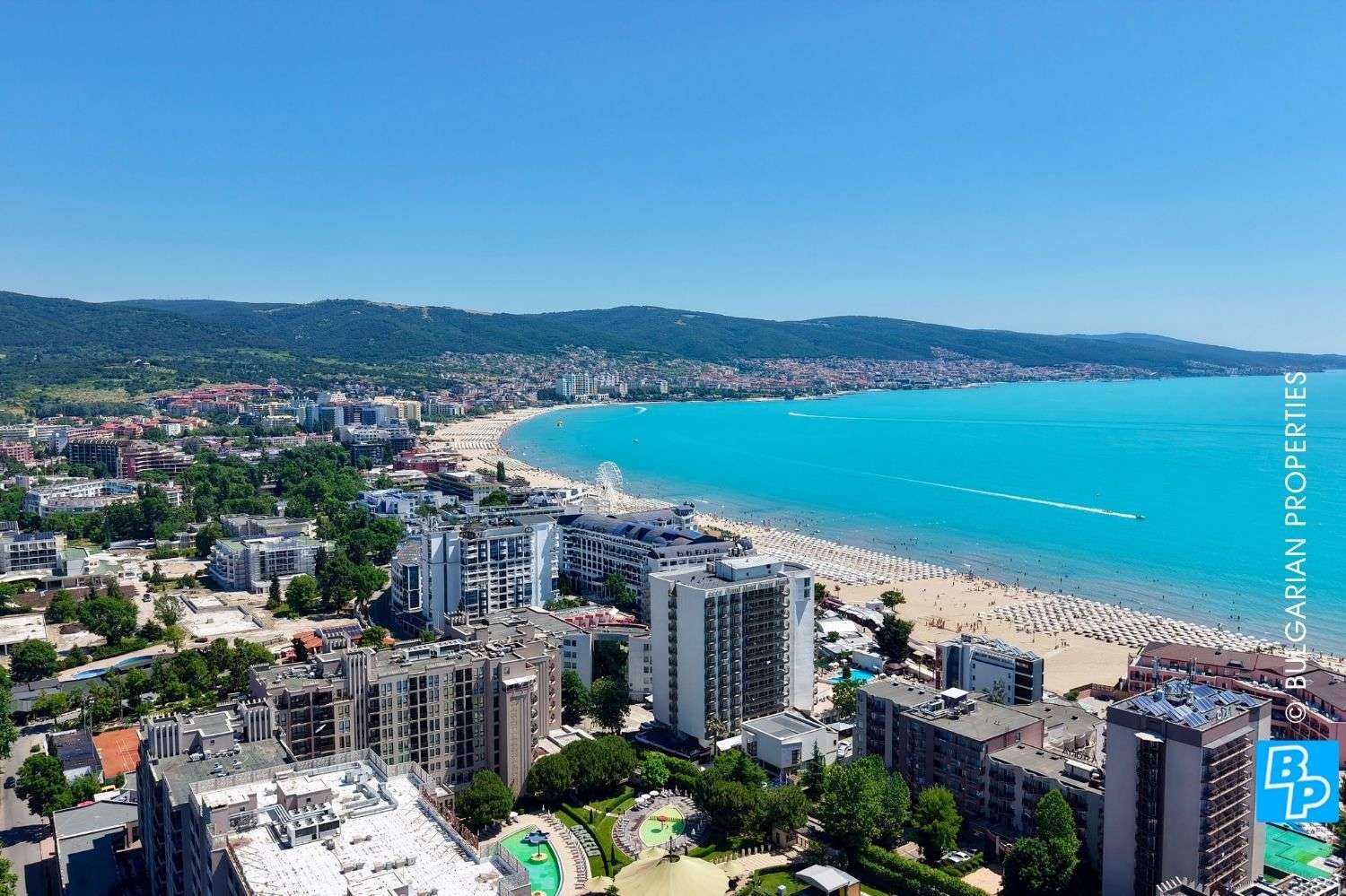 After several years of steady price growth, increased investment demand and more active participation from both Bulgarian and international buyers, in 2026 the holiday property market in Bulgaria is entering a more mature phase. The main resorts along the Black Sea coast and in the mountain destinations continue to form the core of supply and demand, but the market dynamics are now shifting from “rapid growth” towards more selective transactions and a clearer differentiation between high-quality and secondary properties.
Prices: growth is slowing, but not stopping
During the period 2023–2025, holiday properties in Bulgaria recorded cumulative growth which, in the most attractive locations, reached double-digit levels.
At the beginning of 2026, the trend is more towards moderate price growth or stabilisation rather than a new price jump. According to data from Bulgarian Properties, in seaside resorts such as Sunny Beach, Nessebar and Sveti Vlas, the prices of quality apartments in well-maintained complexes range at around EUR 1,200–2,000/sq.m, while premium properties exceed these levels. Sozopol has firmly joined the group of the most preferred seaside locations, with average prices of EUR 1,500–1,600/sq.m, driven by strong demand for gated complexes with additional services and the limited supply of quality properties in the old town.
Along the Northern Black Sea coast — Balchik and Kavarna — the market remains weaker in terms of liquidity, but there is a gradual increase in interest in larger properties and houses, as well as steady annual price growth of 4–6%.
In Bansko, Pamporovo and other mountain resorts, values remain lower on average, between EUR 900 and EUR 1,200–1,300/sq.m, with a clear price increase for properties with good locations and rental potential. Borovets traditionally has higher prices, reaching average levels of between EUR 1,600 and EUR 2,000.
Supply: more owners exiting the market
One of the key factors in 2026 is the growing supply. The reasons are a combination of economic and behavioural factors:
• Some owners are not achieving the expected returns from short-term rentals
• Maintenance costs, fees to management companies and repair expenses are rising
• Limited personal use — many properties are used rarely and remain vacant
• Accumulated capital gains after several years of price growth and a desire to “cash in” following the adoption of the euro
To find out how much your holiday property has appreciated and what it is worth today, use the free online property calculator by Bulgarian Properties in just a few seconds.

This creates a natural “exit pressure” from the market, especially in more saturated resort complexes. The summer season traditionally strengthens this process — viewing activity increases, complexes look their best, and the presence of international buyers is stronger.
Demand: fewer impulsive purchases, more investment logic
The key development in 2026 is that price is no longer the only driver of transactions. Buyers are increasingly assessing profitability, maintenance costs and the actual occupancy levels achievable through short-term rentals.
Demand is shifting from an “emotional holiday purchase” towards an investment-led approach, experts say. This is clearly reflected in the buyer profile:
• Bulgarian households with higher incomes looking for a second home with the option of partial rental
• Investors focused on short-term letting
• International buyers looking for a second home at a more affordable price compared with the Mediterranean
There is also greater sensitivity towards the quality of complex management. Poorly maintained buildings lose buyer interest more quickly, even when offered at a lower price. At the same time, many buyers are looking for properties in buildings with no maintenance fee.
What buyers are looking for: the new preferences
Several preferred property types are clearly emerging:
• One-bedroom apartments in well-maintained complexes with a swimming pool and good infrastructure
• Properties with low or no maintenance fees and a predictable management structure
• Homes suitable for year-round use, not only seasonal stays
Larger apartments and houses are sought less frequently, and only when they offer a strong location and an attractive price. The quality of the micro-market is becoming a key factor — the specific complex is often more important than the resort itself.
Comparison with 2025: fewer transactions, greater selectivity
Compared with 2025, the market in 2026, at least so far, is characterised by a slight slowdown in the number of transactions in the mass segment, a longer selling period and a greater difference between “sellable” and “stagnant” offers. A comparison of the number of transactions in the first quarter of 2026 with the first quarter of 2025 shows an average of 15% fewer sales in Bulgaria this year, while the comparison in resorts such as Nessebar and Balchik shows an even sharper decline of up to 30%.
A dividing line is becoming increasingly clear between properties with good locations, appropriate pricing and professional management, and those that remain on the market for significantly longer without buyer interest.
What is also being observed in residential properties in the major cities is equally valid for the holiday property market — the market is not shrinking, but it is becoming more uneven and more dependent on the quality of the specific property. In this sense, 2026 is characterised more by a “market of choice” than by a market of mass activity.
The introduction of the euro is proving to be a factor that has a stronger influence on transaction dynamics than on price levels themselves. The past year was marked by a stronger desire among buyers to make decisions and close deals more quickly, often motivated both by investment expectations and by the desire to protect themselves from inflationary pressures and currency uncertainty. Activity in the holiday property market was observed among both Bulgarian buyers and international investors, who traditionally view Bulgaria as a more affordable entry point into the European holiday property segment.
Following the adoption of the euro, analysts expect a further increase in activity from international buyers. In the short term, this may lead to faster transactions for quality properties and to a further widening of price differentiation within individual resorts.
For sellers, the active summer season is a favourable moment when the property is positioned correctly, as liquidity traditionally increases. For buyers, the market offers more choice, but also requires a more detailed analysis of the real return on investment.

The euro adds an additional layer of market dynamics, but it does not change the underlying logic: the market is increasingly driven by quality, profitability and sustainability, and less by speculative expectations.
View our offers by the sea and in the ski resorts.
Read more news
More News

Bulgaria's property market is entering a more balanced phase, with price growth slowing but no signs of a market crash. At the same time, the country's entry into the eurozone is creating new opportunities to attract international property buyers and investors. These were among the key messages shared by Polina Stoykova MRICS, Managing Director of BULGARIAN PROPERTIES, during an inte...

We are entering the final quarter of the year – traditionally one of the most important periods for the property market.
Following the summer months, September brought the market back to its usual rhythm. Buyers are active again, sellers are moving ahead with their plans, and quality, correctly priced properties continue to find their new owners.
One of the key trend...

We are welcoming Autumn with encouraging signs from the Bulgarian property market! 🍂🏡
August, traditionally one of the quietest holiday months of the year, brought a noticeable increase in activity. The market once again demonstrated that when attractive properties are offered at the right price, buyers are ready to act and transactions can happen quickly.

Bulgaria is preparing for one of the biggest international events in its recent history. Burgas has officially been selected to host the Eurovision Song Contest 2027, bringing Europe’s largest live music show to the Bulgarian Black Sea coast for the first time.
The 71st Eurovision Song Contest will take place in Arena Burgas, with the two Semi-Finals scheduled for 11 a...