
 Call
Call

 Send Email
 Messenger
 WhatsApp

Plovdiv turns round its fortunes
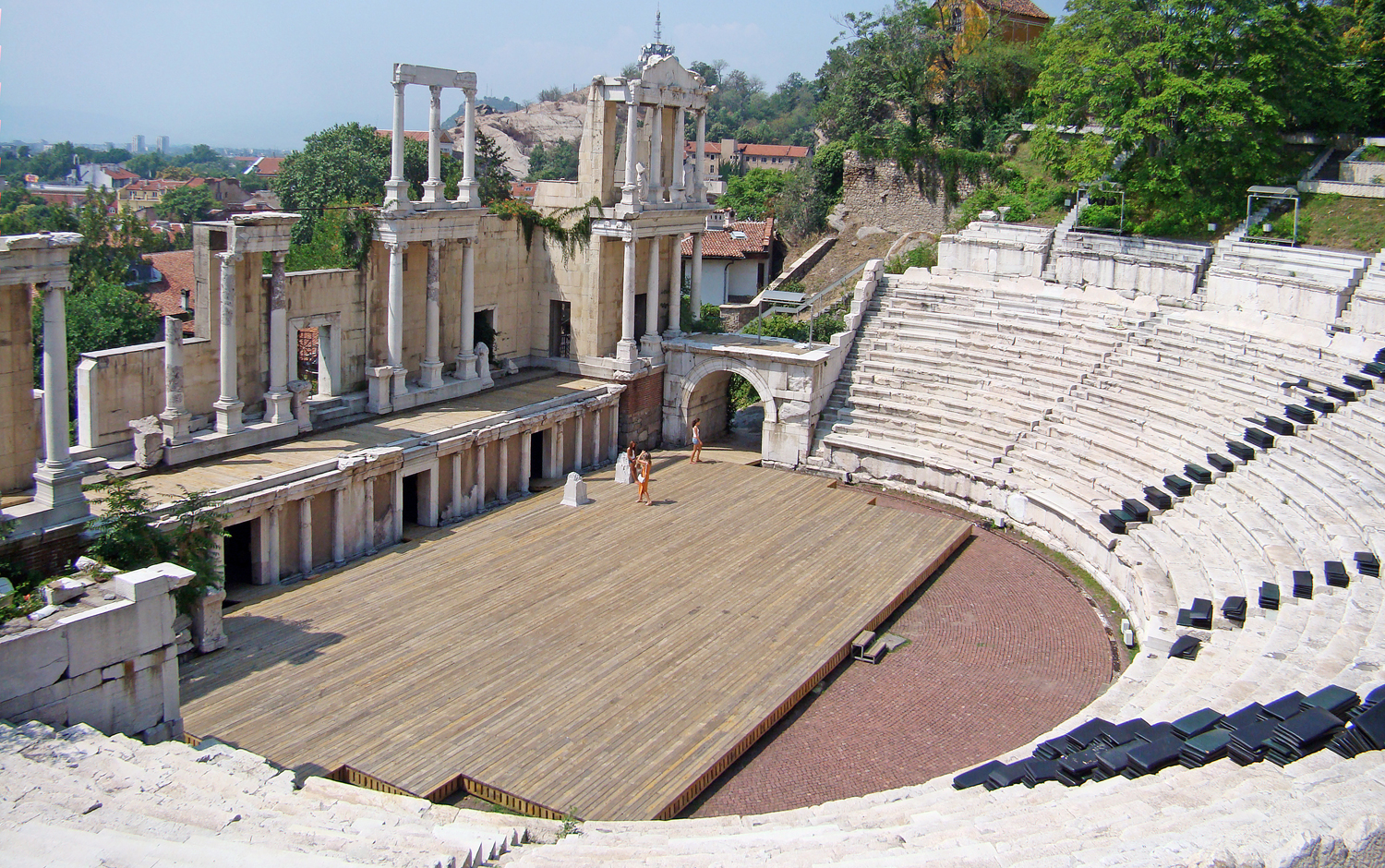 Source: The Financial Times
On a hot summer evening in Plovdiv, children splash noisily in the fountains of a manicured city park. Young techies gather at Hackafe, an IT learning hub in the city’s historic centre.
Bulgaria’s second-largest city, with a population of 350,000 and a rich cultural history, is enjoying a long-awaited revival. Georgi Stoeff, a local economist, estimates foreign and local investors have poured €4bn into companies around Plovdiv since 2011 after a long period of economic stagnation.
The city’s turnround shows what a handful of dynamic local businesspeople and officials can achieve when confidence improves, Bulgarian analysts say. It also helps that the country’s “wild east” image has faded since EU accession, encouraging investors to explore the potential of its impoverished corners.
The fruits include a jobless rate of just 4.9 per cent, sharply lower than the nationwide 8.1 per cent and a function of the development of sectors such as logistics, auto-parts and software serving a global market.
Plovdiv’s recovery is all the more striking when compared with the plight of Greece, its recession-battered neighbour to the south.
Although Greek investors pulled out of Bulgarian banking and real estate projects as their own domestic crisis deepened, some Greek traders have more recently moved headquarters to take advantage of Bulgaria’s 10 per cent tax rates, for both corporate and personal income, the lowest in the EU.
“We dismissed Plovdiv as a low-tech manufacturing centre with not much hope of modernising,” said a former manager of a Greek real estate developer, now a Sofia-based consultant. “It’s turned out rather differently.”
Stefan Stoyanov, deputy mayor for investment, says the catalyst for growth was not just Bulgaria’s 2007 accession to the EU but “a new, co-operative approach by local government”. Nine municipalities in the region gave up competing for investors and teamed up with local businesspeople to offer manufacturing and warehouse facilities in six industrial areas — now promoted as the Trakia economic zone.
Plamen Panchev, co-founder of Sienit Holdings, a local construction company, was a first mover, acquiring sizeable tracts of disused farmland around the city and setting up a one-stop shop to assist potential investors.
“When we started industry had collapsed, people weren’t working the land, all the young were emigrating to find jobs. But my partner and I were convinced Plovdiv had a future,” he said, speaking at the company’s offices in the Rakovski industrial zone, its walls plastered with printouts of factory and warehouse designs.
“We’ve attracted some leading European businesses, especially from central Europe,” Mr Panchev boasts, citing ABB, the Swiss engineering group, Kaufland, the German hypermarket chain and the logistics group DB Schenker.
“There’s a base of talent here, you have access to skilled engineers, quality control expertise, specialists in logistics,” says Tommy Ver Elst, general manager for Bulgaria for Sensata Technologies, a US company that makes high temperature sensors for the European automotive industry. “But the labour market is getting more competitive.”
Mr Stoyanov, the deputy mayor, has taken the search for skilled workers to Ukraine, home to a 250,000-strong Bulgarian ethnic minority in the south of the country. “We think there’s a good chance of getting people to repatriate given the situation there,” he said.
EU funds have helped smarten up Plovdiv’s elegant 19th-century centre, built over the wealthy Roman city of Philippopolis. Museums and art galleries are being revamped: in 2019 the city will achieve a long-held ambition of serving as Europe’s cultural capital.
Nevertheless, Pavel Ezekiev, a partner at Neveq Capital, a venture capital fund, cautions that competition to attract high-tech investors is increasing across south-east Europe. In Bulgaria, other regional centres such as Varna on the Black Sea coast and Veliko Tarnovo, the country’s medieval capital, are eyeing Plovdiv’s success.
“The local government deserves credit for its aggressive approach, but it’s no easy task to attract high-quality investors,” he said.
Check our listings in Plovdiv
Read more news
More News

We are entering the final quarter of the year – traditionally one of the most important periods for the property market.
Following the summer months, September brought the market back to its usual rhythm. Buyers are active again, sellers are moving ahead with their plans, and quality, correctly priced properties continue to find their new owners.
One of the key trend...

We are welcoming Autumn with encouraging signs from the Bulgarian property market! 🍂🏡
August, traditionally one of the quietest holiday months of the year, brought a noticeable increase in activity. The market once again demonstrated that when attractive properties are offered at the right price, buyers are ready to act and transactions can happen quickly.
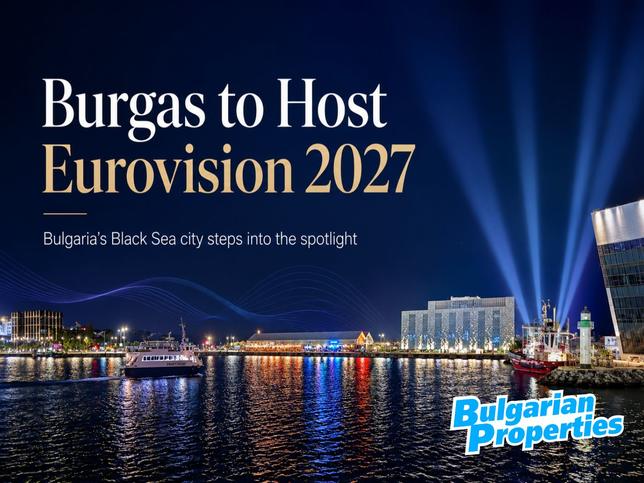
Bulgaria is preparing for one of the biggest international events in its recent history. Burgas has officially been selected to host the Eurovision Song Contest 2027, bringing Europe’s largest live music show to the Bulgarian Black Sea coast for the first time.
The 71st Eurovision Song Contest will take place in Arena Burgas, with the two Semi-Finals scheduled for 11 a...
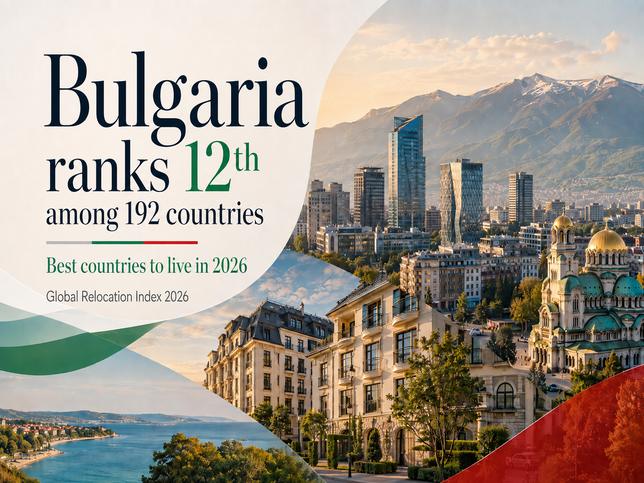
Bulgaria has been ranked 12th among 192 countries in the Rumavi Global Relocation Index 2026, reinforcing its position as an increasingly attractive destination for living, working, retiring and investing in property.
Bulgaria has achieved an impressive 12th place in the global Best Countries to Live in 2026 ranking, compiled as part of the Rumavi Global Relocation Ind...