
 Call
Call

 Send Email
 Messenger
 WhatsApp

Bulgaria attracts record tech investment
Bulgaria, the poorest country in the EU, is attracting a surge of greenfield foreign investment in information and communications technology (ICT), helping to drive a broader increase in cross-border inflows.
The Financial Times has contributed, opening a technology centre in Sofia in April 2019 with 110 employees. Other recent investors include Facebook and the World Bank, both of which have opened offices in the Bulgarian capital providing ICT services this year.
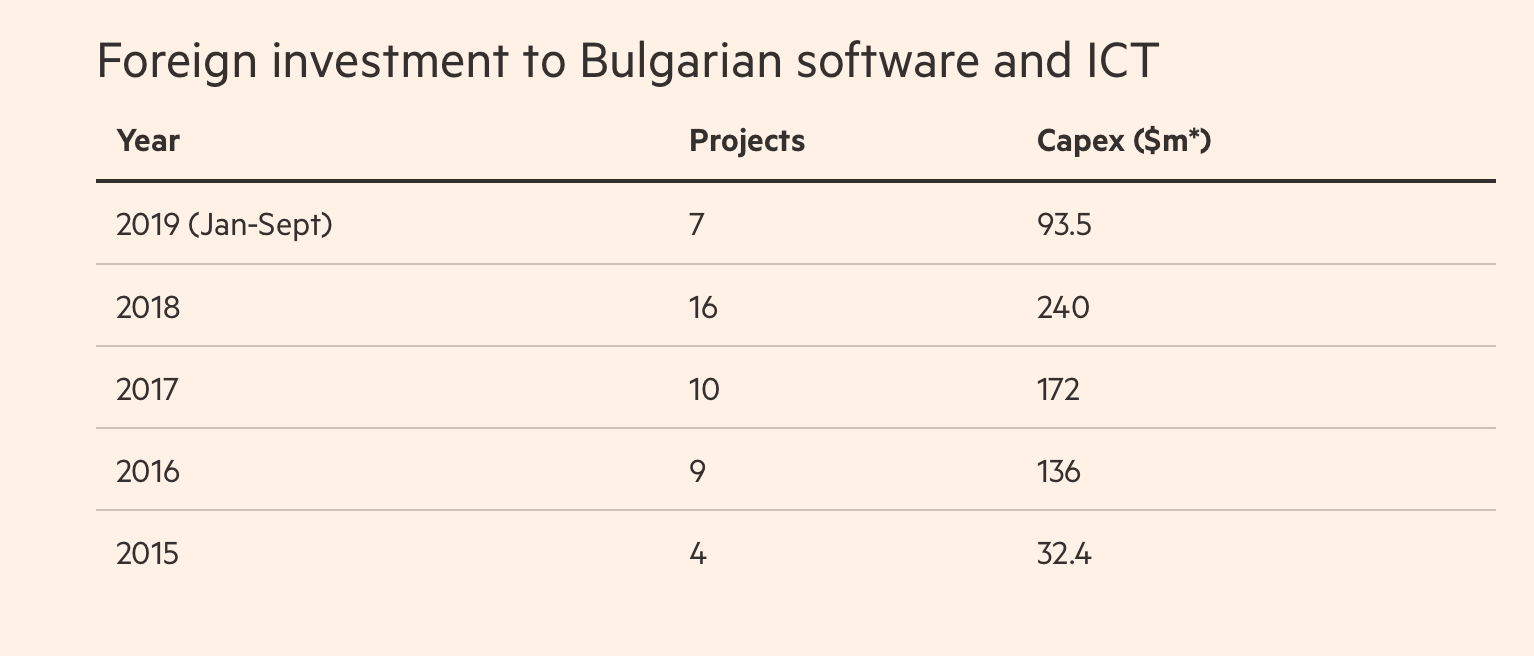
Bulgaria received a record amount of foreign investment in software and ICT services in 2018, with at least 16 projects valued at $240m, mostly in Sofia. Foreign investments in the sector have risen continuously since 2015, according to fDi Markets, an FT data service that tracks announcements by foreign companies of greenfield investments, which result in new facilities and jobs.
“We looked at a number of locations across Asia, Europe and the UK before choosing Bulgaria,” said Cait O’Riordan, the FT’s chief product and information officer, at the new centre’s opening.
“Sofia’s longstanding reputation as a centre for technical excellence, alongside its pedigree in data and artificial intelligence and its emergence as the technology capital of the Balkans, made it an irresistible destination.”
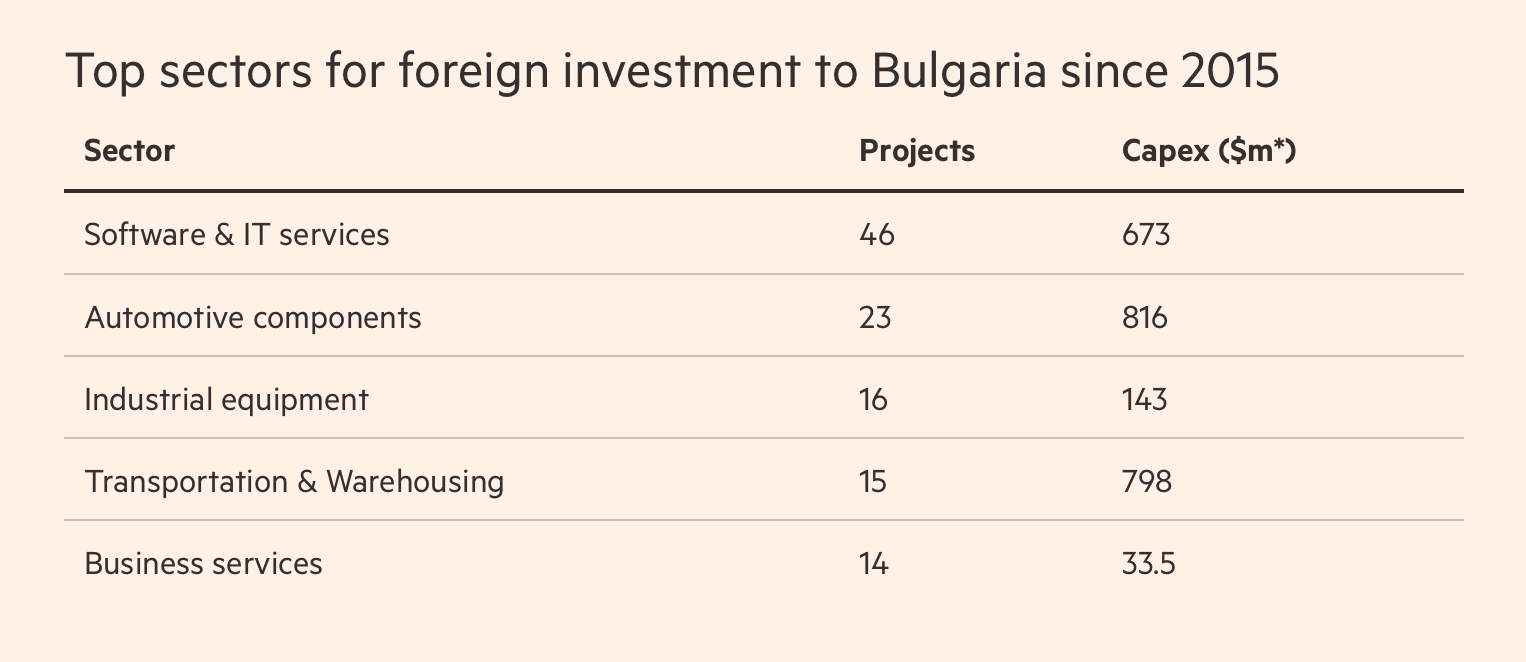
In the five years before 2015, cross-border investment to Bulgaria’s ICT sector averaged only five projects a year. Since then, it has become the primary target for foreign investment, attracting 30 per cent of all projects last year, according to fDi Markets.
Bulgaria has a long tradition in the ICT and electronics sectors that dates back to the communist era. The ICT sector had sales of $3.2bn in 2018, a year-on-year increase of 45 per cent, according to the International Data Corporation. It has more than 12,000 companies, of which 90 per cent are in Sofia, where they employ 50,000 people, according to the Sofia Investment Agency. About 70 per cent of companies sell their services for export only, according to the US Department of Commerce.
“We recognised the potential of Sofia as a world-class technology hub back in 2015,” said Stephen Gardner, chief services and delivery officer of UK sports-data company Genius Sports Group, whose Bulgarian office employs 320 people.
He said the office was likely to double in size over the next few years. “While increasingly competitive, Bulgaria continues to provide access to a deep pool of tech and product development talent.”
Global software company Acronis also expanded in Sofia this year. Its new R&D centre employs 200 engineers, which Acronis aims to expand to 1,000 in the coming years as Bulgaria becomes a global centre for the advancement of cyber protection, the company said.
Almost half of all foreign greenfield investments into Bulgaria since 2018 have taken the form of expansions of existing facilities, especially in added-value R&D projects. The biggest drivers of investment have been the availability of skilled workers and domestic market growth, according to fDi Markets.
Bulgaria offers broadband services that are among the fastest in the EU, a flat tax rate of 10 per cent on corporate profits and personal income, one of the EU’s lowest rates, and competitive labour and living costs.
The country also boasts the EU’s second-highest proportion of women working in the ICT sector, at around 45 per cent in early 2018, and easy licensing laws for IT companies.
Yordanka Fandakova, Sofia’s first female mayor, said the city was “one of the educational centres of the region”. For the past 10 years, she said, Sofia was the European city with the highest growth of per capita GDP, ranking third in Europe in the number of ICT start-ups and delivering 120 per cent growth in its software sector over the past five years.
More than one in 10 workers in Sofia are employed in the ICT sector. More than half of all newly rented office space in the city in the third quarter of this year was taken by ICT firms, according to real estate company MBL.
This year, Sofia was one of eight EU cities chosen to host the first European supercomputers — the largest EU investment in Bulgaria’s scientific infrastructure. The city ranks second among the top 10 fastest-growing tech centres in Europe according to the State of the European Tech report, 2018.
Most foreign investors in Bulgarian tech over the past two years have come from the US and the EU, according to fDi Markets.
Jakov Milatovic, a regional economist at the European Bank for Reconstruction and Development, said Bulgaria’s cultural affinity with such investors was one pull factor, along with its place in the EU, high quality of life for a low cost of living, political stability and average annual GDP growth of 4 per cent since 2016.
The country also benefits from its proximity to Romania and Serbia, forming a tech triangle that some are calling the Silicon Valley of south-eastern Europe. Indeed, foreign investment to Bucharest’s tech sector has also grown exponentially since 2015, according to fDi Markets.
However, said Mr Milatovic, compared to some EU member states, “Bulgaria has work to do. The country has deteriorated about 25 positions in the World Bank’s ease of doing business over the last five years as other countries make improvements.”
He said further work to fight corruption and improve social policies — especially in family care, such as better kindergarten support — would be a good signal for private sector development.
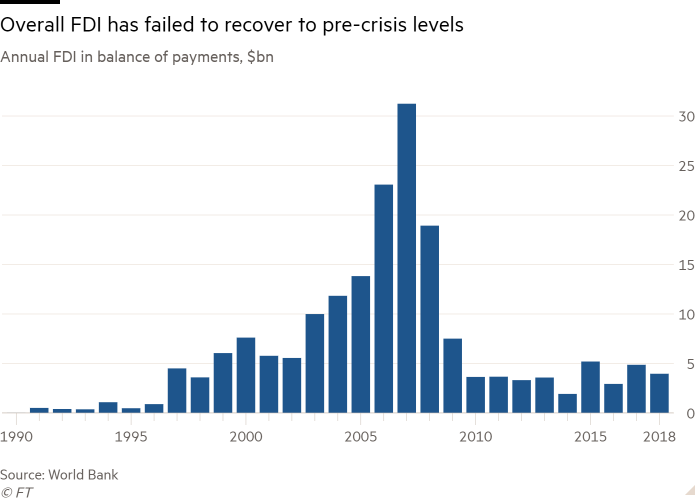
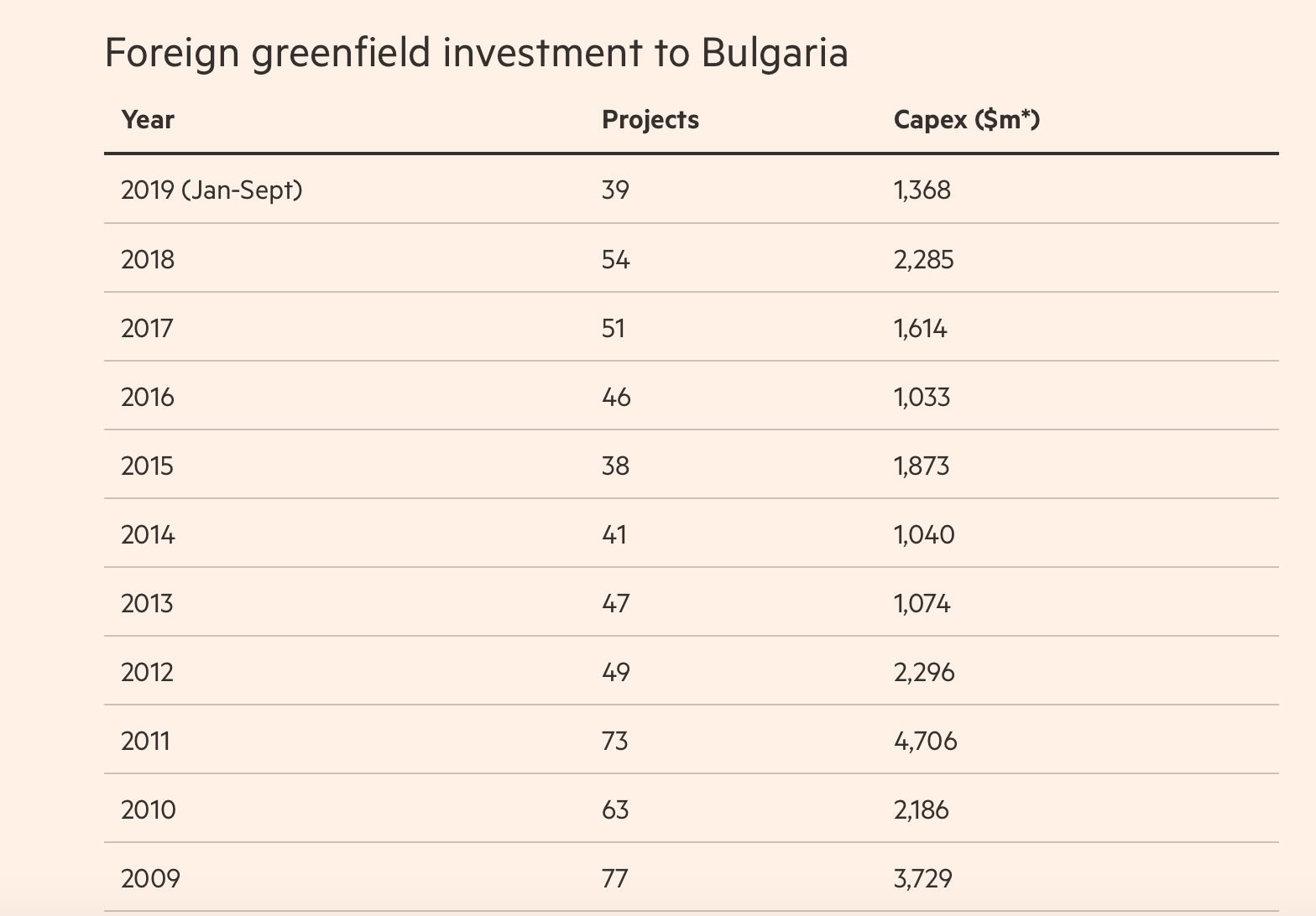
Both greenfield FDI and overall FDI recorded in the balance of payments — which includes mergers and acquisitions, intra-company loans and other items — have failed to recover to their levels before the global financial crisis of 2008-09, when they were rising quickly following Bulgaria’s accession to the EU in 2007.
However, since 2014, inflows have shown a mostly positive, albeit slow, recovery, underpinned by flows to the ICT sector.
Check our properties in Sofia
Check our beach properties
Check properties in ski resorts
Check out our properties in rural countryside
Read more news
More News
It’s time for us in Bulgaria to welcome one of the brightest and most beloved holidays of the year! 💐🌷🌈🐰
We would like to inform you that during the upcoming Orthodox Easter holidays and official public days off, from April 10th to April 13th inclusive, the offices of BULGARIAN PROPERTIES will be closed.
If you would like to get in touc...

The spring market is gaining momentum!
March showed that the real estate market in Bulgaria is developing in a stable and balanced way – with activity across all segments and transactions ranging from affordable properties to high-end homes.
In this dynamic yet more mature market environment, our Agents of the Month stood out – the experts at BULGARIAN PROPERTIES, wh...
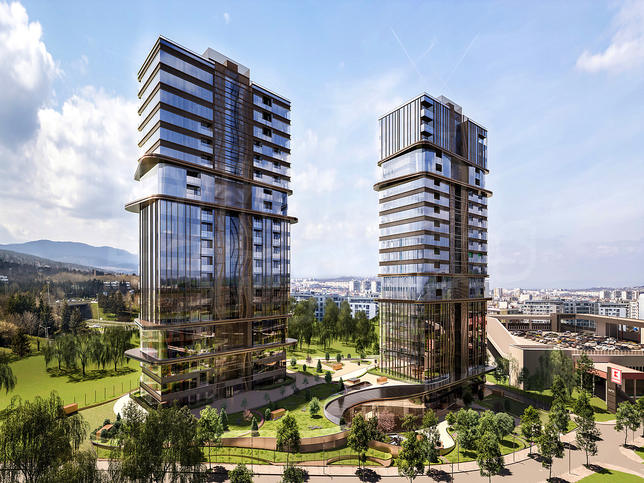
At the end of 2025, investor AMur, in partnership with BULGARIAN PROPERTIES, launched the construction of SKY TOWERS by AMur – an ambitious residential development in the southern part of Sofia.
Within the next four years, in the Manastirski Livadi – East district, at the junction of the Ring Road and Bulgaria blvd., two 75-metre towers will rise, envisioned by the inv...
The first months of 2026, following Bulgaria’s accession to the eurozone, outline a new dynamic in the residential property market. After the record activity in 2025, when many buyers accelerated their decisions in anticipation of the introduction of the euro, the market is gradually beginning to return to a more moderate and sustainable pace.
Although official statistics for the e...